Executive Summary
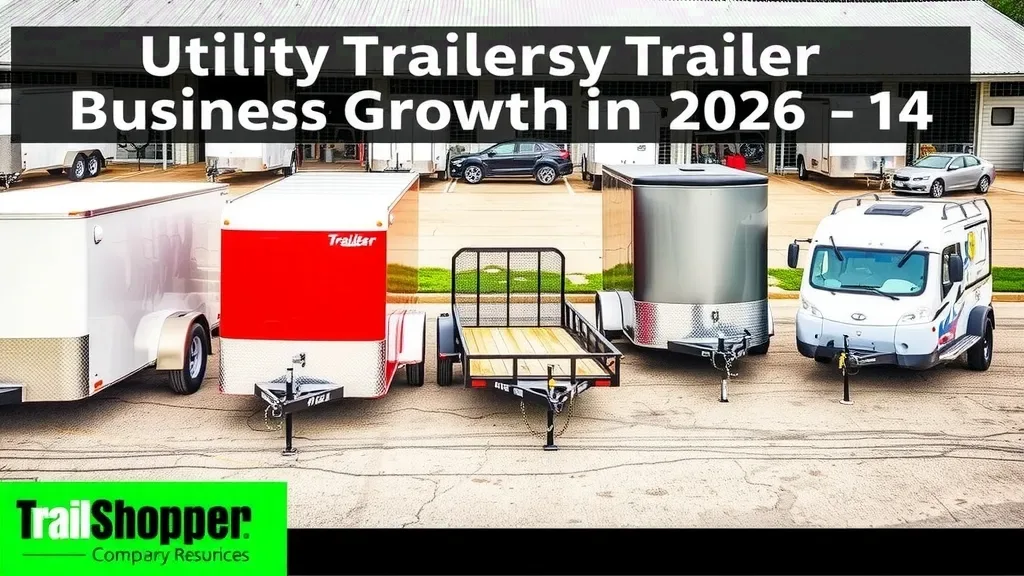
Utility trailers continue to be the workhorse of the small‑business fleet, fueling growth for landscapers, contractors, hobbyists and regional distributors. Our national data shows an average listing price of $1,800 for new utility units, with a typical markup that yields 15‑30% gross profit for dealers who manage inventory efficiently and leverage high‑impact accessories.
In 2026, three forces are reshaping the utility segment:
- Supply‑chain pressure from rising steel costs and component shortages.
- Digital buyer behavior – 2‑3 weeks of online research, heavy reliance on reviews, and a 71% financing rate.
- Dealer technology advantage – Trailer Shopper® AI’s video presenter, omnichannel syndication and unified inbox are turning inventory into a revenue engine.
Below we break down every angle a dealer needs to dominate the utility trailer market this year.
1. Market Landscape – Numbers That Matter
Our intelligence platform aggregates data from thousands of dealers nationwide, providing a clear snapshot of where utility trailers sit in the broader market.
Average price: $1,800 (national average for new units).
Inventory turnover: New utility trailers spend an average of 20‑30 days on the lot before a markdown is triggered; used units linger 40‑60 days.
Markdown schedule: After 30 days on the lot, price is reduced by 5% automatically, with a wholesale trigger at 90 days if the unit remains unsold.
These figures align with the broader trend that open‑type trailers (including utilities) are moving faster than enclosed cargo units, which average 40 days for new stock. The faster cycle translates into lower financing costs for dealers and higher cash‑flow velocity.
“Buyers spend an average of 2‑3 weeks researching online before making a purchase,” our data shows, underscoring the need for a polished digital presence.
In addition, 71% of utility trailer buyers finance their purchase, while 62% begin their search online. Price, condition and brand remain the top three decision factors.
2. Buyer Demographics & Purchase Drivers
Utility trailers appeal to a diverse cross‑section of the U.S. economy. The primary segments are:
- Landscaping & lawn‑care firms – need 5×8 to 7×14 models for equipment, soil and plant transport.
- Small‑scale contractors – use 6×10 and 7×16 units for tools, lumber and debris.
- Recreational hobbyists – ATV, boat and motorcycle owners who value a low‑profile, easy‑load platform.
- Mobile vendors & pop‑up businesses – rely on utility frames to mount kiosks, generators and inventory.
Across all groups, the top purchase motivators are:
- Price competitiveness – buyers compare multiple listings before committing.
- Condition and warranty – especially for used units; a clear warranty statement can tip the scale.
- Brand reputation – Great Dane, Aluma, and Featherlite consistently rank in the top‑three for perceived quality.
Because online reviews influence 85% of buying decisions, dealers who actively solicit and respond to feedback see a measurable lift in conversion rates.
3. Pricing Tiers, Profit Margins & Cost Pressures
Utility trailer pricing in 2026 falls into three clear tiers:
| Tier | Typical Size | Price Range | Gross Margin |
|---|---|---|---|
| Entry‑Level | 5×8, 5×10 | $1,200 – $1,800 | 15‑20% |
| Mid‑Range | 6×10, 6×12 | $1,800 – $2,500 | 20‑25% |
| Premium | 7×14, 7×16 (steel‑frame, upgraded suspension) | $2,500 – $4,500 | 25‑30% |
Two macro‑level cost drivers are shaping these margins:
- Steel price surge: Since February 2026, steel has risen 12% globally, adding roughly $200‑$350 to the bill of materials for a 7×14 steel‑frame unit.
- Supply‑chain disruptions: Component shortages (axles, brakes) have extended lead times by 2‑3 weeks, prompting dealers to carry a modest safety stock.
Dealers can offset these pressures by:
- Negotiating bulk steel purchases through our factory‑direct network.
- Promoting financing options – the 71% financing rate means a dealer can capture interest revenue via partner lenders.
- Utilizing the Trailer Shopper® AI video presenter to showcase premium features, justifying higher price points.
4. Top Manufacturers & Best‑Selling Models
While the market is fragmented, a handful of manufacturers dominate utility trailer sales:
- Great Dane – recently expanded its Georgia plant, boosting capacity for 5×8 and 6×10 steel frames.
- Aluma – aluminum‑body units that appeal to buyers seeking corrosion resistance.
- Featherlite – known for lightweight yet rugged designs, especially the 7×14 “Heavy‑Duty” series.
Our best‑selling SKUs (based on turnover speed and profit contribution) are:
- Great Dane 5×8 Steel Utility – entry‑level, high volume.
- Aluma 6×10 Aluminum Utility – mid‑range, strong on‑road stability.
- Featherlite 7×14 Heavy‑Duty – premium, favored by contractors with heavy equipment.
These models consistently rank in the top 10 for days‑on‑lot performance, often selling before the 30‑day markdown trigger.
5. Inventory Management – Turning Stock Into Cash
Effective inventory control is the linchpin of a profitable utility trailer operation. Our platform’s analytics dashboard provides real‑time visibility into:
- Days‑on‑lot for each SKU.
- Automatic markdown triggers (5% after 30 days).
- Wholesale alerts when a unit hits 90 days without a sale.
Dealers who align their ordering cadence with the 30‑day new‑stock target and the 60‑day used‑stock target see a 12% reduction in carrying costs.
When a unit approaches the wholesale trigger, the Trailer Shopper® AI can generate a targeted email campaign, highlighting a limited‑time discount and bundling accessories to accelerate the close.
6. Accessories – High‑Margin Upsell Opportunities
Utility trailers are a blank canvas for add‑ons that boost both functionality and dealer profit. The top‑earning accessories in 2026 are:
- Toolboxes & lockable compartments – average add‑on price $250, margin 40%.
- Heavy‑duty ramps – $150‑$300, margin 35%.
- LED lighting kits – $80‑$120, margin 45%.
- Spare tire & wheel‑lock kits – $100‑$150, margin 38%.
- Custom branding (banners, bow flags, vehicle wraps) – $200‑$500, margin 50%+. Our in‑house print shop delivers these items on‑demand, reducing lead time to days.
Dealers who bundle a toolbox, ramp and LED kit into a “Ready‑to‑Work” package see an average upsell increase of 22% per transaction.
7. Leveraging Trailer Shopper® Technology for Maximum Reach
In a market where 62% of buyers start their search online, a dealer’s digital footprint is the most valuable sales asset. Trailer Shopper® provides an end‑to‑end solution that turns a raw inventory list into a multi‑channel marketing engine.
AI‑Powered Video Listings
The AI Presenter creates a personalized video showcase for each utility trailer in minutes – no camera crew required. Dealers can embed these videos on their white‑label website, blog, and social‑media posts, increasing engagement by up to 30%.
One‑Click Syndication
With Trailer Shopper® AI, a dealer clicks once to push the listing (photos, specs, video) to Facebook Marketplace, Instagram, Craigslist and other classifieds. This eliminates the manual posting workload and guarantees consistent branding across every channel.
Unified Inbox & Smart Messaging
All inbound inquiries funnel into a single inbox, where the AI chat assistant can respond instantly with price, financing options, and accessory bundles. This reduces response time from an average of 4 hours to under 2 minutes, a key factor in converting the 2‑3 week online research window into a sale.
Analytics & Heatmaps
Dealers can track which listings generate the most clicks, which accessories are most viewed, and where geographic demand spikes occur. This data informs targeted ad spend across six ad networks from a single dashboard.
8. Actionable Dealer Checklist – Win the Utility Segment in 2026
- Refresh listings weekly – high‑resolution images, detailed specs, and a 30‑second AI video.
- Encourage reviews – send post‑sale emails via the CRM pipeline asking for a 5‑star rating; respond to every comment within 24 hours.
- Implement the 5% markdown rule after 30 days; use the AI to auto‑generate a “Limited‑Time Discount” post.
- Bundle accessories – create “Work‑Ready” packages for each size tier and promote them in the listing description.
- Leverage financing partners – highlight the 71% financing rate in the headline and embed a “Get Pre‑Approved” button.
- Use Trailer Shopper® AI video presenter to demonstrate load capacity, ramp operation, and accessory fit.
- Run quarterly email newsletters (per consumer‑behavior insight) featuring new arrivals, seasonal promotions, and dealer‑specific events.
- Monitor steel price alerts – adjust pricing or promote aluminum models when steel spikes exceed 10%.
9. Outlook – What 2027 May Hold for Utility Trailers
Looking ahead, three trends will likely shape the utility market:
- Electrification of auxiliary equipment – buyers will seek integrated power packs for tools, creating a new accessory revenue stream.
- Increased demand for lightweight aluminum frames as fuel‑efficiency standards tighten.
- Greater reliance on AI‑driven lead nurturing – dealers who fully adopt Trailer Shopper® AI’s automated follow‑up will capture a larger share of the 62% online‑first buyer segment.
Dealers that stay ahead of steel cost fluctuations, maintain a strong digital presence, and exploit the full suite of Trailer Shopper® tools will not only protect margins but also position themselves as the go‑to source for utility trailers in their region.
— Trailer Shopper Intelligence Desk