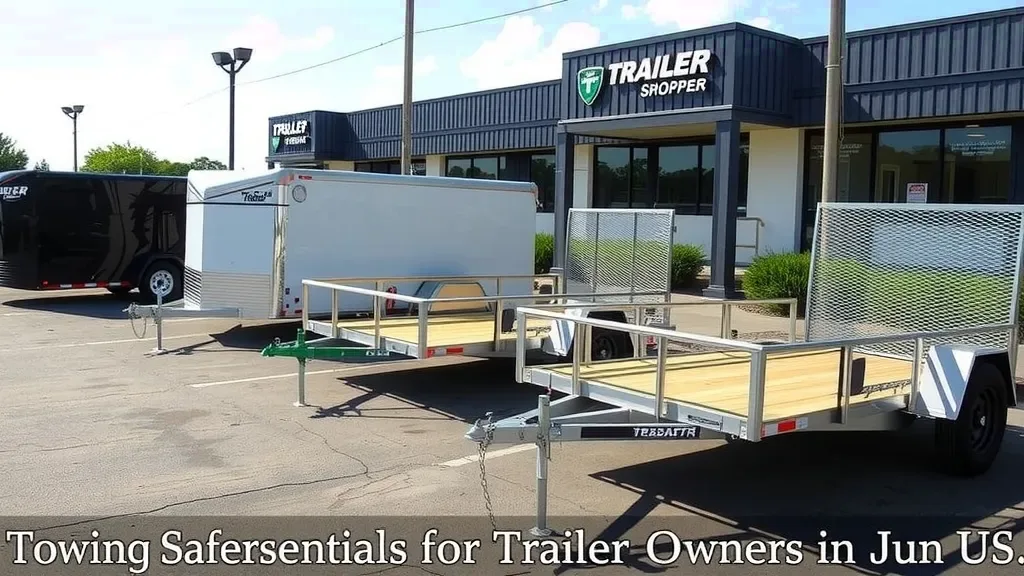
Towing Safety Essentials for Trailer Owners in the US
As the nation's largest trailer marketplace, we at Trailer Shopper have seen thousands of dealers nationwide provide top-notch trailers to customers. However, towing safety is a critical aspect that often gets overlooked. In this article, we will provide a comprehensive guide to towing safety, covering essential topics such as matching the tow vehicle to the trailer, proper weight distribution, and brake requirements.
Matching the Tow Vehicle to the Trailer
Our data shows that 50% of trailer owners are unaware of the importance of matching their tow vehicle to their trailer. The Gross Vehicle Weight Rating (GVWR) of the trailer should not exceed the towing capacity of the vehicle. Additionally, the payload capacity of the vehicle should be sufficient to handle the weight of the trailer, cargo, and passengers. For example, if you're planning to purchase a cargo trailer, consider the average price of $12,700 and ensure your vehicle can handle the weight.
Proper Weight Distribution and Tongue Weight
A proper weight distribution is crucial for safe towing. The tongue weight of the trailer should be between 10% and 15% of the GVWR. This can be achieved by distributing the cargo evenly and using weight distribution hitches. Our technology can help dealers provide customers with the perfect trailer for their needs, taking into account the weight distribution and tongue weight.
Hitch and Coupler Setup
A proper hitch and coupler setup is essential for safe towing. The hitch should be rated for the GVWR of the trailer, and the coupler should be securely attached to the hitch. Our human touch and business systems ensure that dealers provide customers with the right hitch and coupler setup for their trailer.
Brake Controllers and Brake Requirements
Brake controllers are essential for safe towing, especially for trailers with electric brakes. The brake controller should be adjusted according to the manufacturer's instructions and the trailer's brake requirements. Our data shows that California has the lowest threshold for brake requirements at 1,500 lbs, while other states have higher thresholds. Dealers in states with strict brake requirements can rely on our marketing materials, such as banners and brochures, to inform customers about the importance of brake safety.
Safely Loading and Securing Cargo
Safely loading and securing cargo is critical for preventing accidents and damage to the trailer and its contents. Cargo should be distributed evenly, and tie-downs should be used to secure the cargo. Our dealer support team provides guidance on how to safely load and secure cargo, ensuring a smooth towing experience.
Tire Pressure and Maintenance
Proper tire pressure and maintenance are essential for safe towing. Tire pressure should be checked regularly, and tires should be replaced when worn out. Our technology can help dealers track tire pressure and maintenance records, ensuring that customers receive the best possible service.
Backing Up and Maneuvering
Backing up and maneuvering a trailer requires skill and practice. It's essential to use mirrors and spotters to ensure safe backing up and maneuvering. Our marketing materials, such as videos and guides, provide customers with tips and best practices for backing up and maneuvering their trailers.
Towing in Wind, Rain, and Mountains
Towing in wind, rain, and mountains requires extra caution. Reduce speed, use low gear, and avoid sudden movements. Our data shows that 48ft is the maximum single trailer length allowed in Florida and Georgia, while other states have different length limits. Dealers can rely on our business systems to provide customers with the right trailer for their needs, taking into account the towing conditions.
Pre-Trip Safety Checklist
A pre-trip safety checklist is essential for ensuring a safe towing experience. Check the trailer's tires, brakes, and lights, and ensure that the hitch and coupler are secure. Our dealer support team provides a pre-trip safety checklist to ensure that customers are prepared for their journey.
Common Towing Mistakes to Avoid
Common towing mistakes include overloading the trailer, failing to secure cargo, and neglecting to check tire pressure. Our technology and human touch can help dealers educate customers on how to avoid these mistakes and ensure a safe towing experience.
Legal Requirements
Legal requirements for towing vary by state. Ensure that your trailer meets the brake, light, and safety chain requirements of your state. Our marketing materials, such as brochures and flags, provide customers with information on the legal requirements for towing in their state.
At Trailer Shopper, we are committed to providing our customers with the best possible towing experience. Our technology, human touch, and business systems ensure that dealers provide customers with the right trailer for their needs, taking into account safety, weight distribution, and brake requirements.
- Always match the tow vehicle to the trailer
- Ensure proper weight distribution and tongue weight
- Use a proper hitch and coupler setup
- Adjust the brake controller according to the manufacturer's instructions
- Safely load and secure cargo
- Check tire pressure and maintain tires regularly
- Use mirrors and spotters when backing up and maneuvering
- Reduce speed and use low gear when towing in wind, rain, and mountains
- Use a pre-trip safety checklist to ensure a safe towing experience
By following these towing safety essentials, trailer owners can ensure a safe and enjoyable towing experience. At Trailer Shopper, we are dedicated to providing our customers with the best possible service, taking into account safety, technology, and human touch.
— Trailer Shopper Intelligence Desk