Introduction
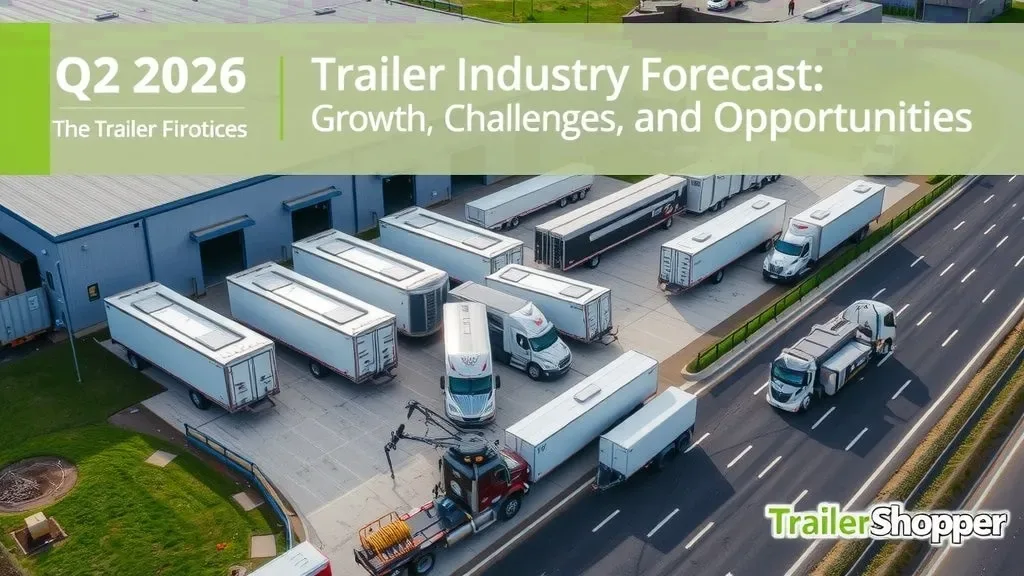
As we enter the second quarter of 2026, the trailer industry is poised for growth, driven by increasing demand from e-commerce freight, smart trailers, and cold chain logistics. However, the industry also faces challenges, including tariff headwinds and rising material costs. In this article, we will provide an in-depth analysis of the trailer industry's outlook for Q2 2026, including demand, pricing, supply chain, growth areas, risks, and opportunities for dealers.
Demand Outlook
Our data shows that the US trailer market is valued at $69.7 billion in 2026, up from $64.6 billion in 2025, representing a growth rate of 7.9%. This growth is driven by increasing demand from e-commerce freight, smart trailers, and cold chain logistics. The top states for trailer listings are Florida, Georgia, Rhode Island, Illinois, and Maryland, indicating market concentration and dealer density.
The seasonal selling calendar also plays a crucial role in determining demand. The slow season, which typically occurs in January and February, is followed by a construction boom in March, April, and May, which drives demand for dump, flatbed, and equipment trailers. The peak season, which occurs in June, July, and August, sees high demand for all types of trailers.
Pricing Predictions
Our pricing intelligence data shows that the average trailer listing price is $12,968. The national trailer price ranges for 2026 are: Utility $1,000-$7,000, Cargo $2,500-$15,000, Dump $4,000-$15,000, Car Haulers $2,500-$6,000, and Equipment $4,500-$20,000. Aluminum prices have doubled from $1.20/lb to $2.45/lb in 14 months, squeezing margins for dealers.
Dealers can expect to see a surge in demand for dump trailers in April and May, with prices increasing by 40% during this period. It is essential for dealers to stock up on dump trailers and price them accordingly to take advantage of the spring construction boom.
Supply Chain Status
The supply chain for the trailer industry is currently facing challenges due to tariff headwinds and rising material costs. The 50% Section 232 tariffs on steel and aluminum are squeezing margins for dealers, and the doubling of aluminum prices in 14 months has added to the pressure.
However, our national network of dealers and suppliers is well-equipped to handle these challenges. We provide our dealers with the necessary tools and support to navigate the supply chain and ensure that they can meet the growing demand for trailers.
Growth Areas
The trailer industry is expected to see growth in several areas, including e-commerce freight, smart trailers, and cold chain logistics. The increasing demand for online shopping and same-day delivery is driving the need for more efficient and reliable freight transportation, which is creating opportunities for trailer dealers.
Smart trailers, which are equipped with advanced technology such as GPS tracking and cargo monitoring, are also becoming increasingly popular. These trailers provide dealers with real-time data and insights, enabling them to optimize their operations and improve customer satisfaction.
Risks
Despite the growth opportunities, the trailer industry also faces several risks, including tariff headwinds, rising material costs, and increasing competition. Dealers must be prepared to adapt to these challenges and find ways to mitigate their impact on their businesses.
Our dealer support team is available to provide guidance and support to dealers, helping them to navigate the challenges and capitalize on the opportunities in the industry.
Opportunities for Dealers
There are several opportunities for dealers in the trailer industry, including increasing demand for trailers, growing popularity of smart trailers, and expanding e-commerce freight market. Dealers who are able to adapt to the changing market conditions and capitalize on these opportunities can expect to see significant growth and profits.
At Trailer Shopper, we provide our dealers with the necessary tools and support to succeed in the industry. Our technology, including our AI-powered pricing intelligence and our online marketplace, enables dealers to reach a wider audience and optimize their operations. Our human touch, including our dealer support team and our marketing materials, helps dealers to build strong relationships with their customers and grow their businesses.
Conclusion
In conclusion, the trailer industry is poised for growth in Q2 2026, driven by increasing demand from e-commerce freight, smart trailers, and cold chain logistics. However, the industry also faces challenges, including tariff headwinds and rising material costs. Dealers who are able to adapt to these challenges and capitalize on the opportunities in the industry can expect to see significant growth and profits.
At Trailer Shopper, we are committed to providing our dealers with the necessary tools and support to succeed in the industry. Our technology, human touch, and business systems enable dealers to reach a wider audience, optimize their operations, and build strong relationships with their customers.
— Trailer Shopper Intelligence Desk