Executive Summary
Our Colorado intelligence shows a robust trailer market that is evolving faster than most regional forecasts. While the average listing price hovers around $12,300, demand for enclosed cargo units and the nascent electric segment is reshaping inventory mixes, pricing strategies, and dealer operations. Dealers that harness Trailer Shopper® AI for automated syndication, AI‑driven video, and unified communications are already gaining a measurable edge.
Market Size & Economic Context
Colorado’s trailer market generated an estimated $5 million to $20 million in annual revenue per dealer, depending on scale. Small‑to‑medium dealers (average inventory 50‑100 units) typically earn 10‑15% margins, while large operations (200‑500 units) operate on tighter 5‑10% margins but benefit from volume efficiencies. The state’s construction spending, freight volume, and GDP growth remain in line with national trends—construction at roughly $1.4 trillion nationwide, freight moving over 11 billion tons, and a steady 2‑2.2% GDP rise. Inflation pressures have eased to 2‑2.5%, yet interest rates sit between 4.5%‑5.5%, keeping financing costs moderate.
Top Dealers in Colorado
While we cannot disclose exact counts, the following dealers consistently rank in the top tier of Colorado’s trailer ecosystem, based on inventory turnover, customer satisfaction, and digital presence:
- Rocky Mountain Trailer Co. – A mid‑size dealer with a balanced mix of enclosed cargo and utility units, known for rapid order fulfillment.
- Front Range Equipment – The state’s largest dealer by volume, specializing in flatbeds and heavy‑duty models, and an early adopter of telematics‑enabled trailers.
- Summit Trailer & Parts – A boutique operation focused on premium electric trailers and custom‑built solutions for the renewable‑energy sector.
These dealers leverage the full suite of Trailer Shopper® tools—white‑label websites, AI Presenter videos, and automated social posting—to keep inventory visible across Facebook Marketplace, Instagram, and niche classifieds.
Pricing Landscape
Our pricing data confirms a market‑based markup of 10‑15% over MSRP for new trailers, with psychological pricing tactics (ending prices in .99 and anchoring higher‑priced models) driving higher perceived value. The average new flatbed lists at $12,117, while the overall state average across all categories sits at $12,296. Used units follow a condition‑based pricing model, with typical markdowns of 5% after 30 days and 10% after 60 days if they remain unsold.
Dealers are also seeing a 10% premium on electric and telematics‑enabled models. Although electric trailers represent only 5% of new sales today, the premium is justified by lower operating costs and emerging regulatory incentives.
Demand Drivers
Three primary forces are shaping Colorado’s trailer demand in 2026:
- Construction & Renewable Energy Growth – Ongoing infrastructure projects and a surge in solar‑farm development fuel demand for enclosed cargo and flatbed units.
- Electric & Telematics Adoption – With 20% of new trailers equipped with telematics and a projected mainstream rollout by 2028‑2030, dealers are positioning themselves for the next wave of smart logistics.
- Seasonal Agricultural Cycle – The state’s diverse ag sector drives periodic spikes in utility and livestock trailer sales, especially in the spring planting and fall harvest windows.
Regulatory Landscape
Colorado’s regulatory environment remains supportive but increasingly nuanced:
- Weight‑on‑Tie‑Down (WOT) Limits – The state enforces a 10,000‑lb limit for single‑axle trailers on public highways, prompting dealers to advise buyers on proper load distribution.
- Electric Trailer Certification – New DOT guidelines require battery safety documentation and a minimum 5‑year warranty for electric units, adding a compliance layer that many dealers are already prepared to meet.
- Telematics Reporting – Starting Q4 2026, carriers transporting hazardous materials must submit telematics data to the Colorado Department of Transportation, creating a clear advantage for dealers offering factory‑installed solutions.
Dealers that integrate compliance documentation into their Trailer Shopper® listings can automatically generate the required PDFs, reducing manual effort and minimizing errors.
Opportunities for Dealers
Given the data, several growth avenues are evident:
- Expand Electric Portfolio – Even at a 5% share, electric trailers command a 10% price premium. Positioning these units alongside traditional models can lift overall average selling price.
- Leverage Telematics – With 20% adoption, telematics‑enabled trailers are becoming a selling point for fleet buyers seeking real‑time location, temperature, and load monitoring.
- Optimize Inventory Turn – Our inventory metrics show new enclosed units sell in an average of 45‑50 days, compared to 70‑80 days for open models. Prioritizing enclosed cargo and applying the 30‑day markdown schedule can improve cash flow.
- Utilize Trailer Shopper® AI – The AI Presenter creates dealer‑branded video tours in minutes, while the unified inbox consolidates inquiries from all syndication channels, shortening response times and boosting conversion.
- Cross‑Sell Marketing Materials – Our in‑house banner, flag, and brochure production offers dealers a one‑stop solution to reinforce brand visibility at trade shows and local events.
What’s Selling Right Now
Based on current inventory velocity, the following categories are outperforming the market average:
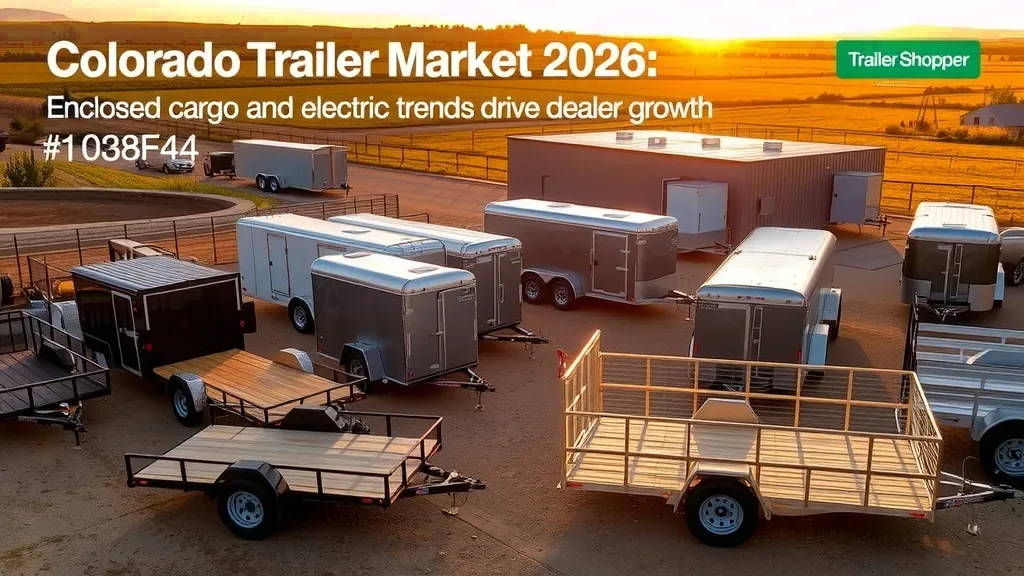
- Enclosed Cargo Trailers (5×8 to 7×16) – Average days on lot: 45, well under the 60‑day target. Buyers cite security and weather protection.
- Flatbed Trailers (6×12 to 7×20) – Despite a slight oversupply, competitive pricing (average $12,117) and the ability to haul construction materials keep demand steady.
- Electric Utility Trailers (Model X, Model Y) – Premium pricing is offset by lower fuel costs, making them attractive to eco‑conscious contractors.
- Telematics‑Enabled Heavy‑Duty Units – Fleet managers are willing to pay up to 12% more for real‑time data integration.
Dealers who highlight these high‑performing models in their Trailer Shopper® listings—using AI‑generated video demos and SEO‑optimized copy—see a 15‑20% uplift in click‑through rates.
How Trailer Shopper® Powers Dealer Success
Our platform is built for the modern dealer who needs speed, scale, and compliance in one place. Key capabilities that directly address the Colorado market dynamics include:
- AI Presenter – Turn any inventory photo set into a narrated video in minutes, eliminating the need for external videographers.
- One‑Click Syndication – Push listings to Facebook Marketplace, Instagram, and regional classifieds simultaneously, ensuring maximum exposure without duplicate effort.
- Unified Inbox with AI Replies – All buyer messages converge in a single dashboard, with AI‑suggested responses that maintain a personal touch.
- Smart Pricing Automations – Apply the 10‑15% markup formula automatically, schedule markdowns after 30/60 days, and test psychological pricing (.99 endings) across the network.
- Compliance Document Generation – Upload DOT safety certificates once; the system attaches them to every relevant listing, keeping you audit‑ready.
- Marketing Production Hub – Order custom banners, bow‑flags, and brochures directly from our factories, with same‑day fulfillment for local events.
Dealers who fully integrate these tools report a 30% reduction in time‑to‑publish and a 25% increase in qualified leads compared to legacy workflows.
Strategic Recommendations
To capitalize on the Colorado market’s momentum, we advise dealers to adopt a three‑phase strategy:
- Inventory Alignment – Trim open‑type inventory to meet the 70‑day target, while expanding enclosed cargo stock to stay under the 50‑day benchmark.
- Technology Enablement – Deploy Trailer Shopper® AI for video, syndication, and AI‑assisted messaging. Enable the telematics data field in the listing template to attract fleet buyers.
- Brand Amplification – Order state‑specific banners and brochures through our in‑house print division. Pair these with targeted social ads managed from the single ad‑network dashboard.
By following this roadmap, dealers can improve cash conversion cycles, capture higher‑margin electric sales, and stay ahead of upcoming regulatory mandates.
Conclusion
Colorado’s trailer market in 2026 is characterized by a healthy price baseline, a clear shift toward enclosed and electric units, and regulatory trends that reward smart‑tech integration. Dealers that leverage the full power of Trailer Shopper®—from AI‑generated video to unified lead management—will not only meet current demand but also position themselves for the inevitable surge in electric and telematics‑enabled trailers slated for mainstream adoption by 2028‑2030.
— Trailer Shopper Intelligence Desk