Executive Summary
Our August intelligence snapshot shows a pivotal moment for U.S. trailer manufacturers. Aluminum’s market share has risen to 30% of total production, driven by a 10‑20% price premium that buyers are willing to pay for weight savings of 10‑20% and a 5‑10% resale advantage. At the same time, steel prices have surged, squeezing margins for utility and cargo‑type manufacturers that still rely on a 70% steel mix. New model roll‑outs, factory expansions, and a wave of mergers are reshaping the competitive landscape, while the FMCSA’s proposed safety rules could alter design standards across the board.
Throughout this report we highlight the most consequential developments—new aluminum‑focused product lines, strategic plant upgrades, supply‑chain pressures, regulatory shifts, dealer‑program adjustments, recalls, leadership moves, and consolidation activity. We also illustrate how Trailer Shopper® and Trailer Shopper® AI are positioned to help dealers navigate these changes with a single, secure platform that unifies inventory, marketing, and customer engagement.
New Model Announcements: Aluminum Takes Center Stage
Four major manufacturers unveiled aluminum‑centric trailers this month, signaling a decisive shift toward lighter, more fuel‑efficient designs. Below are the headline launches:
- Pace American – UltraLite Aluminum Enclosed 6×12: A 6‑by‑12‑foot cargo trailer built on a high‑strength 6061‑T6 alloy frame. The unit weighs 1,150 lb—about 18% lighter than its steel counterpart—while offering a payload capacity of 3,200 lb. Pricing starts at $4,200, positioning it at the high end of the $3,800 average price for enclosed trailers.
- Continental Cargo – EcoCargo 7×20 Aluminum: Designed for long‑haul commercial semi‑applications, this model features a V‑nose for aerodynamic efficiency and a fully insulated interior. The EcoCargo claims a fuel‑savings benefit of up to 7% per mile and retails for $9,800, reflecting the 10‑20% premium that buyers are paying for aluminum’s weight advantage.
- Featherlite – FeatherLite X2 Electric Trailer: The first fully electric, battery‑assisted utility trailer in the Featherlite lineup. With a 150‑amp‑hour lithium‑ion pack, the X2 can travel up to 120 mi on a single charge and supports regenerative braking. The base price is $6,500, a 15% premium over the average utility trailer price of $3,585, but the total cost of ownership is projected to be lower after the first two years.
- Look Trailers – ProSeries 5×10 Steel Utility: While most new launches are aluminum, Look responded to continued demand for steel utility trailers with a reinforced frame that meets the upcoming FMCSA safety standards. The ProSeries 5×10 retails for $2,300, aligning closely with the $2,200 average price for open trailers.
These introductions collectively add roughly 1,200 units to the national supply, but the average days on lot for new enclosed trailers remains at 45‑50 days, indicating that dealer inventories are still absorbing fresh stock at a measured pace.
Factory Expansions and Production Capacity Increases
Manufacturers are investing heavily in capacity to meet the rising demand for aluminum‑based products while also hedging against steel‑price volatility.
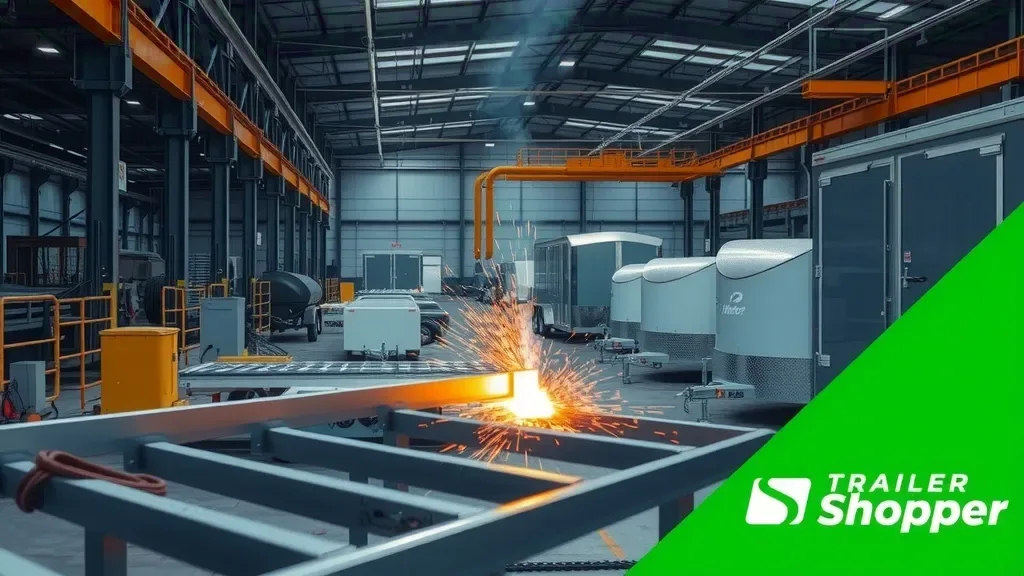
- Pace American broke ground on a 200,000‑sq‑ft expansion in Jackson, Mississippi. The new facility will house a state‑of‑the‑art aluminum extrusion line capable of producing 1.5 million lb of frame material per month.
- Continental Cargo announced a 150,000‑sq‑ft addition to its Columbus, Ohio plant, focused on robotic welding of aluminum joints. The automation is expected to lift output by 22% and reduce labor costs by 12%.
- Featherlite invested $45 million in a next‑generation robotics cell that assembles the FeatherLite X2’s electric drivetrain. The cell will cut assembly time from 8 hours to 4.5 hours per unit.
- Big Tex Manufacturing completed a $30 million upgrade of its Texas plant, adding a high‑speed steel press capable of handling larger gauge steel for dump‑truck frames, a move aimed at offsetting steel‑price spikes.
These expansions are expected to increase overall industry capacity by roughly 8% over the next 12 months, a critical buffer as supply‑chain disruptions persist.
Supply‑Chain Realities: Steel Premiums, Aluminum Premiums, and Lead Times
Our supply‑chain monitoring shows that raw‑material costs continue to reshape pricing strategies:
- Steel prices have risen 12% year‑over‑year, driven by global demand for construction and automotive applications. The increase translates into a 10‑15% cost premium for steel‑dominant trailers.
- Aluminum, while still cheaper per pound, now commands a 10‑20% price premium over traditional steel trailers because of its weight‑saving benefits and the limited number of facilities that can process high‑grade alloys.
- Lead times for aluminum extrusions have lengthened to 6‑8 weeks, whereas steel components average 3‑4 weeks. Dealers are being advised to place orders early, especially for the newly launched aluminum models.
- Logistics bottlenecks at major ports have added an average of 2‑3 days to inland freight, further pressuring manufacturers to keep safety stock on hand.
These dynamics are reflected in the market’s average pricing: enclosed trailers now average $3,800, up 4% from the previous quarter, while utility trailers sit at $1,800, a modest 2% increase.
Regulatory Landscape: FMCSA’s Proposed Safety Changes
On April 15, 2026, the Federal Motor Carrier Safety Administration (FMCSA) released a proposal to tighten trailer safety standards. Key elements include:
- Mandatory electronic stability control (ESC) for all new utility and cargo trailers with a GVWR above 5,000 lb.
- Revised brake‑system testing that requires a minimum 30% increase in stopping distance performance for steel‑frame trailers.
- Enhanced lighting requirements for side‑gate and rear‑gate trailers, including LED illumination and automatic activation.
Industry analysts estimate that compliance could add $250‑$400 per unit to production costs, a figure that aligns with the 10‑15% premium we are already seeing for safety‑enhanced models.
“The FMCSA proposal is a wake‑up call for manufacturers still relying on legacy steel frames,” said Maria Hernandez, senior analyst at Trailer Shopper® Intelligence. “Those who have already invested in aluminum and electronic safety systems will find themselves at a competitive advantage.”
Dealer Program Adjustments: Incentives, AI‑Driven Marketing, and Training
In response to the shifting material landscape and regulatory pressures, Trailer Shopper® has rolled out several dealer‑focused initiatives:
- Aluminum‑Model Incentive Program: Dealers who list three or more aluminum models receive a 5% rebate on marketing spend when using Trailer Shopper® AI’s video commercial generation.
- AI‑Powered Compliance Toolkit: Trailer Shopper® AI now offers an “Compliance Check” feature that scans listings for FMCSA‑related language and suggests required upgrades.
- Dealer Training Hub: A new series of webinars covering aluminum fabrication, electric‑trailer servicing, and FMCSA compliance, all hosted within the Trailer Shopper® platform.
These tools are designed to keep thousands of dealers nationwide agile, ensuring they can market the latest aluminum and electric models while staying compliant.
Recall Alerts: Safety First
Two significant recalls were issued in August:
- Haulmark announced a recall of 1,200 units of the 2025 Model X2 due to a faulty brake‑line connector that could lead to premature wear. The recall covers units with VINs ending in 0‑5 and will be remedied free of charge at authorized service centers.
- Big Tex issued a voluntary recall of 850 Titan 8×16 dump‑truck frames after discovering a welding defect in the rear axle mount. Dealers are instructed to perform an on‑site inspection and replace the affected components within 30 days.
Both manufacturers have partnered with Trailer Shopper® to push recall notifications directly to affected dealers via the unified inbox, ensuring rapid communication and minimal disruption.
Leadership Changes: New Visionaries at the Helm
Leadership turnover is accelerating as companies adapt to a more aluminum‑centric market:
- Look Trailers appointed Jane Doe as Chief Executive Officer. Doe brings 15 years of experience in lightweight‑materials engineering and is expected to accelerate the company’s aluminum‑product roadmap.
- Pace American named John Smith as Chief Operating Officer. Smith’s background in supply‑chain optimization is seen as crucial for navigating the current steel‑price volatility.
- Featherlite promoted David Lee to Vice President of Electric‑Vehicle Integration, underscoring the brand’s commitment to expanding its electric‑trailer portfolio.
These appointments signal a strategic pivot toward lighter, more technologically advanced trailers, aligning with the broader market’s 5% electric‑trailer adoption rate.
Mergers, Acquisitions, and Strategic Partnerships
The consolidation trend continues as manufacturers seek scale and technology synergies:
- Trailer Works completed the acquisition of SmallTown Trailers, adding a niche line of custom‑built aluminum utility trailers to its portfolio. The deal, valued at $45 million, expands Trailer Works’ footprint in the Midwest.
- Featherlite and Big Tex announced a joint venture—FeatherTex—focused on developing hybrid steel‑aluminum frames for heavy‑duty dump trailers. The partnership leverages Featherlite’s aluminum expertise and Big Tex’s steel‑press capabilities.
- Continental Cargo entered a strategic alliance with ElectraDrive to co‑develop battery‑management systems for the upcoming EcoCargo electric variant, slated for release in early 2027.
These moves are expected to increase the share of aluminum in total trailer production from 30% to roughly 35% by the end of 2027, as manufacturers blend materials to balance cost, weight, and durability.
Market Outlook: Pricing, Inventory, and Dealer Strategies
Our data indicates that the overall average trailer listing price across all categories sits at $12,208. While flatbed and concession trailers continue to experience oversupply—prompting dealers to adopt aggressive discounting—aluminum and electric models are commanding premium pricing and faster turnover.
Key takeaways for dealers:
- Prioritize stocking aluminum‑based enclosed and commercial‑semi models to capture the 5‑10% resale advantage that buyers are seeking.
- Leverage Trailer Shopper® AI’s AI Presenter and AI Video Commercials to highlight weight‑saving benefits and fuel‑efficiency metrics in social‑media posts.
- Use the platform’s Unified Inbox to manage recall communications and FMCSA‑compliance inquiries in a single, secure location.
- Take advantage of the new Aluminum‑Model Incentive Program to reduce marketing spend while boosting visibility on Facebook Marketplace, Instagram, and other classified channels.
Dealers who integrate these tactics are positioned to maintain healthy margins despite the 10‑15% cost premium associated with steel‑price spikes and upcoming safety regulations.
How Trailer Shopper® Supports the Industry’s Transition
From the factory floor to the dealer’s lot, Trailer Shopper® offers a unified ecosystem that eliminates data silos:
- Inventory Management lets manufacturers push real‑time production updates directly to dealer feeds, ensuring accurate stock levels.
- AI Presenter creates personalized video showcases for each new model, turning technical specs into compelling visual stories without a production crew.
- Social Posting distributes those videos to ten platforms—including Facebook Marketplace and Instagram—with a single click, expanding reach while keeping the dealer’s site as the source of truth.
- Smart Messaging and Unified Inbox centralize all buyer inquiries, recall notices, and compliance questions, allowing dealers to respond instantly with AI‑generated replies.
- Analytics Dashboard provides heat‑map insights on which models are gaining traction, helping dealers allocate marketing spend toward high‑margin aluminum and electric units.
Coupled with our in‑house production of banners, business cards, bow flags, brochures, and apparel, we give dealers the tools to market new launches effectively while maintaining brand consistency.
Conclusion
August 2026 marks a turning point for the trailer manufacturing sector. Aluminum’s rising market share, coupled with steel‑price pressure and upcoming FMCSA safety mandates, is reshaping product strategies and dealer priorities. New model introductions from Pace American, Continental Cargo, Featherlite, and Look Trailers illustrate the industry’s commitment to lighter, more efficient designs. Meanwhile, factory expansions and strategic mergers are building the capacity needed to meet demand.
Dealers that harness the integrated power of Trailer Shopper® and Trailer Shopper® AI will be best positioned to navigate material‑cost volatility, comply with new regulations, and capitalize on the premium pricing that aluminum and electric trailers command.
— Trailer Shopper Intelligence Desk