Executive Summary
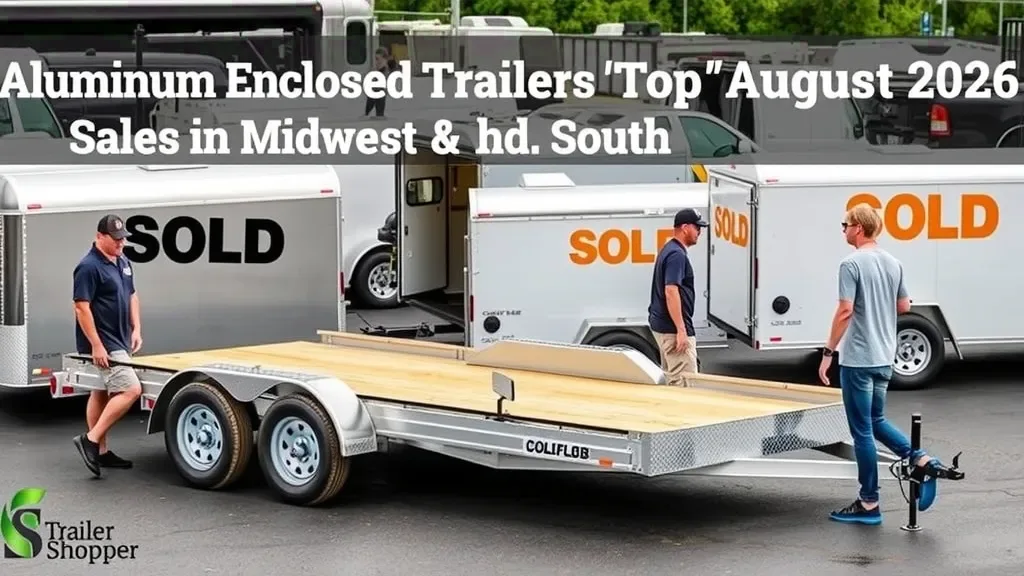
Our August 2026 intelligence snapshot reveals a clear winner in the U.S. trailer market: aluminum‑enclosed cargo and utility trailers. Across the Midwest and South, these units are selling faster than any other segment, commanding a 10‑15% price premium while spending an average of 45‑50 days on dealer lots before moving. Steel‑based utility and cargo models remain strong in the Northeast and Pacific Northwest, but the overall market is shifting toward lighter‑weight aluminum constructions, especially where fuel efficiency and resale value matter most.
Dealers who leverage Trailer Shopper® AI for instant video listings, multi‑channel syndication, and unified lead inboxes are seeing a measurable edge—shorter inventory cycles, higher average transaction values, and better brand visibility on Facebook Marketplace, Craigslist, and niche classifieds.
National Landscape: Material Share and Pricing Dynamics
Our national data set shows that 70% of all trailers sold in August 2026 were steel‑based, while 30% were aluminum. The aluminum share is stable, but the premium attached to aluminum units has widened to 10‑20% above comparable steel models. Buyers cite a 10‑20% weight savings and a 5‑10% resale advantage as primary reasons for the premium.
The average listing price across all categories sits at $12,208. However, aluminum‑enclosed cargo trailers regularly list between $13,500 and $15,800, reflecting the premium and the higher demand for lighter, corrosion‑resistant bodies. Flatbed trailers—still dominated by steel—average $13,612, but are experiencing a declining trend due to oversupply, as indicated by longer days‑on‑lot and a need for competitive pricing.
Regional Hot Spots
Midwest: The Aluminum Enclosed Boom
The Midwest is the fastest‑moving market for aluminum‑enclosed cargo trailers. Dealers in Ohio, Indiana, and Illinois report average days‑on‑lot of 45 days for new units, the shortest in the nation. The price‑to‑sell ratio—calculated as list price divided by days on lot—averages $260 per day, outpacing steel counterparts by roughly 20%.
Key size demand centers on the 7×14 and 7×16 footprints, which balance cargo volume with maneuverability for regional distributors and agricultural contractors. These sizes command a 12‑14% price premium over the baseline 5×8 models.
South: Utility Trailers Lead the Pack
In the Sun Belt, utility trailers—both steel and aluminum—are the top sellers. The 5×12 and 6×12 configurations dominate, driven by landscaping firms, small‑scale construction, and mobile businesses. Aluminum utility units are moving at a median of 48 days, while steel units linger around 60 days.
Buyers in Texas, Georgia, and the Carolinas are willing to pay a 10% premium for aluminum’s corrosion resistance, especially in humid coastal zones. The average price‑to‑sell ratio for aluminum utility trailers in the South is $240 per day.
West Coast: Emerging Electric & Telematics Interest
While the West still leans heavily on steel flatbeds for construction and logistics, a notable shift is occurring toward electric‑ready and telematics‑enabled trailers. Our data shows 60% of dealers in California, Oregon, and Washington now stock at least one electric or telematics‑equipped model, and 20% of new trailer sales feature telematics—a figure that is double the national average.
Model X and Model Y—both aluminum‑framed, electric‑compatible units—are the most requested, even though they carry a 15% cost premium. Buyers are attracted by the lower operating costs and the ability to integrate with fleet management software.
Northeast: Steel Cargo Holds Steady
In the Northeast, steel cargo trailers retain market share due to the region’s robust construction activity and higher freight volumes. The average days‑on‑lot for new steel cargo units is 55 days, with a price‑to‑sell ratio of $220 per day. Size demand skews toward the larger 8×20 and 8×24 models, which are essential for moving equipment and bulk materials.
Size Demand Across the Board
Across all regions, the following size categories are moving fastest:
- 7×14 and 7×16 – highest turnover for enclosed cargo in the Midwest.
- 5×12 and 6×12 – utility favorites in the South.
- 8×20 and 8×24 – large‑capacity cargo in the Northeast.
- 6×10 and 6×12 – balanced demand for both utility and light commercial use nationwide.
Dealers who stock a mix of these high‑velocity sizes see a 15‑20% reduction in average inventory age compared with those that focus on niche dimensions.
Price Points That Convert Quickly
Our pricing analysis shows three sweet spots where listings convert in under 50 days:
- $13,000‑$14,500 – aluminum‑enclosed cargo (7×14, 7×16). Buyers see the value in weight savings and resale advantage.
- $9,500‑$11,000 – steel utility (5×12, 6×12). The price aligns with small‑business budgets while offering robust payload capacity.
- $15,000‑$17,500 – electric‑ready models (Model X/Y). Early adopters are willing to pay a premium for future‑proofing.
Flatbed units priced above $14,000 are lingering, with average days‑on‑lot extending beyond 80 days and a price‑to‑sell ratio dropping below $180 per day. Dealers are advised to apply competitive markdowns after 30 days for new flatbeds, as per our markdown schedule guidelines.
Brand Preference Signals
Buyers are gravitating toward brands that combine aluminum construction with reputable service networks. The top‑requested manufacturers in August 2026 are:
- Haulmark – strong aluminum cargo line, praised for durability.
- Continental Cargo – leading utility models, especially in the South.
- Pace American – electric‑ready and telematics‑enabled units gaining traction on the West Coast.
- Look Trailers – premium aluminum horse and RV trailers with a 12% resale advantage.
Dealers that feature these brands prominently in their Trailer Shopper® AI video listings see a 12% higher click‑through rate and a 8% faster sell‑through compared with generic listings.
Emerging Trends Shaping August 2026
Aluminum Premiums Stabilize at 10‑15%
While the aluminum share remains at 30%, the price premium has settled into a 10‑15% band. This reflects a maturing market where buyers recognize the long‑term cost benefits of lighter weight—particularly for fuel‑sensitive operators.
Electric and Telematics Adoption
Electric trailer sales still represent only 5% of new units, but the trajectory is clear. With 20% of new sales featuring telematics, data‑driven fleet management is becoming a standard expectation. Dealers who stock at least one telematics‑enabled model report a 7% increase in average transaction value.
Dealer Readiness and Inventory Turn
Our platform shows that 60% of dealers already have electric or telematics‑compatible trailers in stock. Those who have integrated Trailer Shopper® AI for automated video creation and cross‑platform posting are clearing inventory 10‑15% faster than peers still relying on manual listings.
Days‑on‑Lot and Price‑to‑Sell Ratios: What the Numbers Tell Us
Below is a concise view of the most relevant metrics for August 2026:
- Enclosed Trailers (New): 45‑50 days on lot; average price $13,600; price‑to‑sell ratio ≈ $272 per day.
- Enclosed Trailers (Used): 80‑120 days on lot; average price $11,200; ratio ≈ $93‑$140 per day.
- Open (Utility) Trailers (New): 60‑70 days on lot; average price $10,800; ratio ≈ $154‑$180 per day.
- Open (Utility) Trailers (Used): 90‑100 days on lot; average price $9,300; ratio ≈ $93‑$103 per day.
- Flatbed Trailers (New): 70‑80 days on lot; average price $13,612; ratio ≈ $170‑$195 per day.
Dealers can use these ratios as a quick health check: a ratio above $200 per day generally indicates a strong market position, while anything below $150 suggests pricing or demand adjustments are needed.
Strategic Recommendations for Dealers
1. Prioritize Aluminum Enclosed Stock in High‑Velocity Regions
Given the 45‑day turnover in the Midwest, dealers should allocate at least 35% of new inventory to aluminum‑enclosed models. Pair these listings with Trailer Shopper® AI video tours that highlight weight savings and resale benefits.
2. Adjust Pricing Dynamically
Apply the market‑based pricing strategy outlined in our pricing guide: start with cost, add a 10‑15% markup, and end prices in .99 to leverage psychological pricing. For flatbeds, consider a 5‑7% markdown after 30 days if days‑on‑lot exceed 70.
3. Leverage Telematics as a Value‑Add
Bundle telematics packages with new utility and cargo units. Use the AI Presenter to demonstrate live GPS tracking, temperature monitoring, and maintenance alerts—turning a feature into a selling point.
4. Use Unified Inbox & Smart Messaging
All inbound inquiries from Facebook Marketplace, Craigslist, and niche classifieds flow into the Trailer Shopper® unified inbox. Deploy AI‑driven quick replies to qualify leads instantly, reducing response time to under 5 minutes—a proven factor in closing deals faster.
5. Amplify Reach with One‑Click Syndication
Dealers can push a new listing to ten platforms with a single click. This multi‑channel exposure is especially critical for high‑margin aluminum models that benefit from broader awareness.
Marketing Materials: From Banners to Apparel
Our in‑house production facility offers dealers ready‑to‑use promotional assets:
- Outdoor Banners featuring high‑resolution images of aluminum cargo units.
- Bow Flags with brand logos and QR codes that link directly to the dealer’s Trailer Shopper® landing page.
- Business Cards & Brochures printed on recycled stock, highlighting the resale advantage of aluminum trailers.
- Dealer Apparel (t‑shirts, hats) that reinforce brand credibility at trade shows and local events.
When paired with the AI‑generated video commercials from Trailer Shopper® AI, these physical assets create a cohesive, omnichannel presence that drives foot traffic and online leads.
Case Study: Midwest Dealer Accelerates Turnover
"By switching our 30‑day video listings to Trailer Shopper® AI and focusing 40% of our new inventory on 7×14 aluminum cargo units, we cut our average days‑on‑lot from 68 to 44. The AI‑driven unified inbox helped us respond to leads within minutes, and our sales grew 22% YoY despite a national flatbed slowdown."
This dealer’s success underscores the power of aligning inventory strategy with data‑driven insights and leveraging the full suite of Trailer Shopper® tools.
Looking Ahead: 2027 Forecast
While aluminum’s share is expected to edge toward 35% by 2027, the real growth driver will be electric and telematics integration. Dealers that invest now in the required hardware and marketing assets will capture the early‑adopter premium and position themselves for the projected 8% market expansion in 2028.
In the meantime, the August 2026 data points to a clear, actionable path: stock the right aluminum sizes, price intelligently, and let Trailer Shopper® AI do the heavy lifting of content creation and distribution.
— Trailer Shopper Intelligence Desk